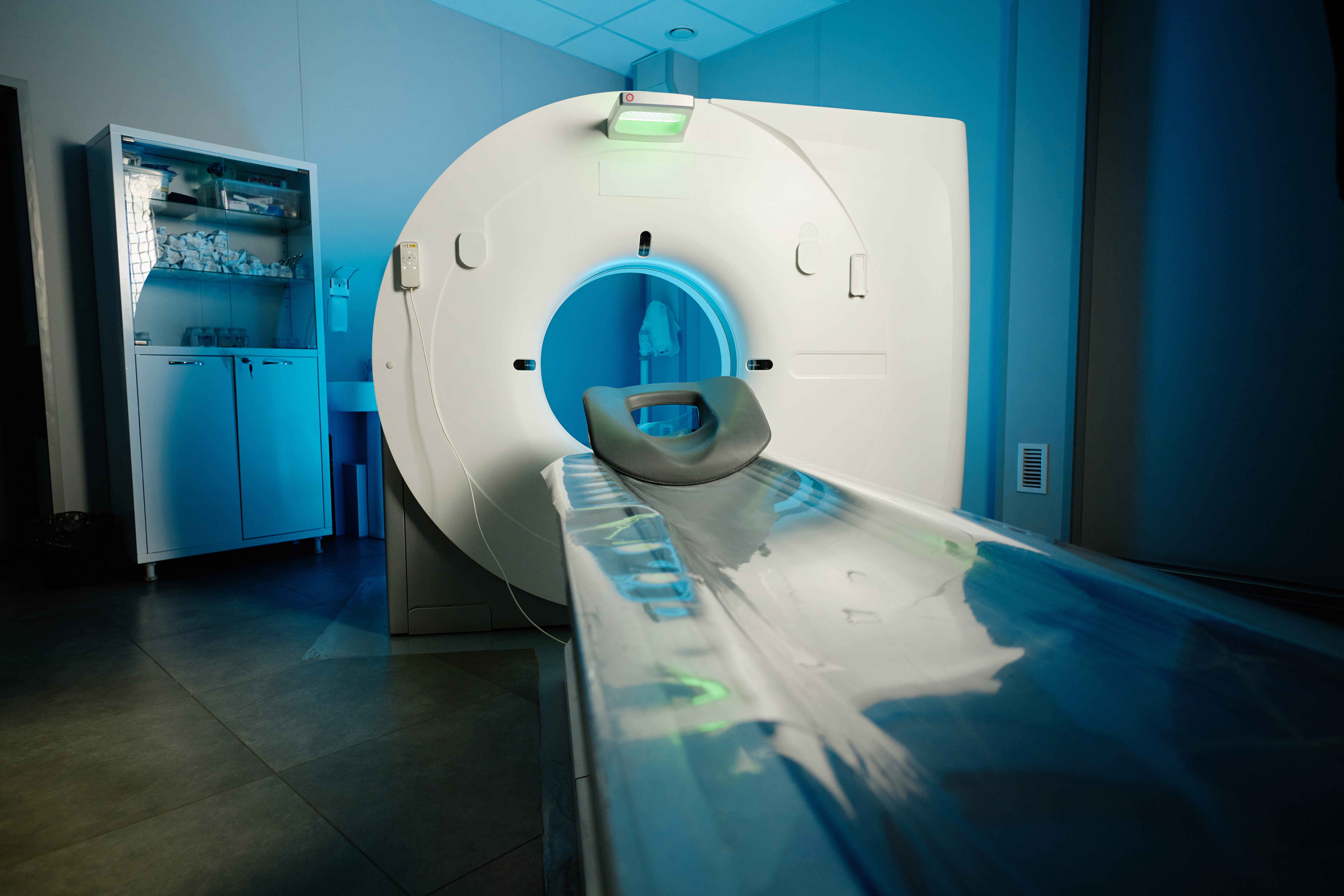
Magnetic Resonance Imaging (MRI) is often associated with diagnosing injuries or investigating symptoms after they appear. In preventive medicine, however, MRI serves a different role: helping clinicians identify structural changes early, establish baselines, and inform long-term health planning before symptoms develop.
At Invest-Med, MRI is used as part of a broader, physician-guided preventive screening approach. It is not intended to diagnose disease on its own, but to provide detailed anatomical insight that supports informed clinical decision-making.
Table of Contents
ToggleWhat Is an MRI?
An MRI is a medical imaging technique that uses powerful magnetic fields and radiofrequency waves to create highly detailed images of soft tissues inside the body. Unlike CT scans or X-rays, MRI does not use ionizing radiation, which makes it particularly valuable when repeated or baseline imaging is clinically appropriate.
Because of its resolution and tissue contrast, MRI is widely used to evaluate the brain, spine, organs, joints, and soft tissues. Clinical overviews from the U.S. National Institutes of Health (NIH) describe MRI as a cornerstone imaging modality for identifying structural abnormalities and changes in tissue composition without radiation exposure.
What Can an MRI Detect?
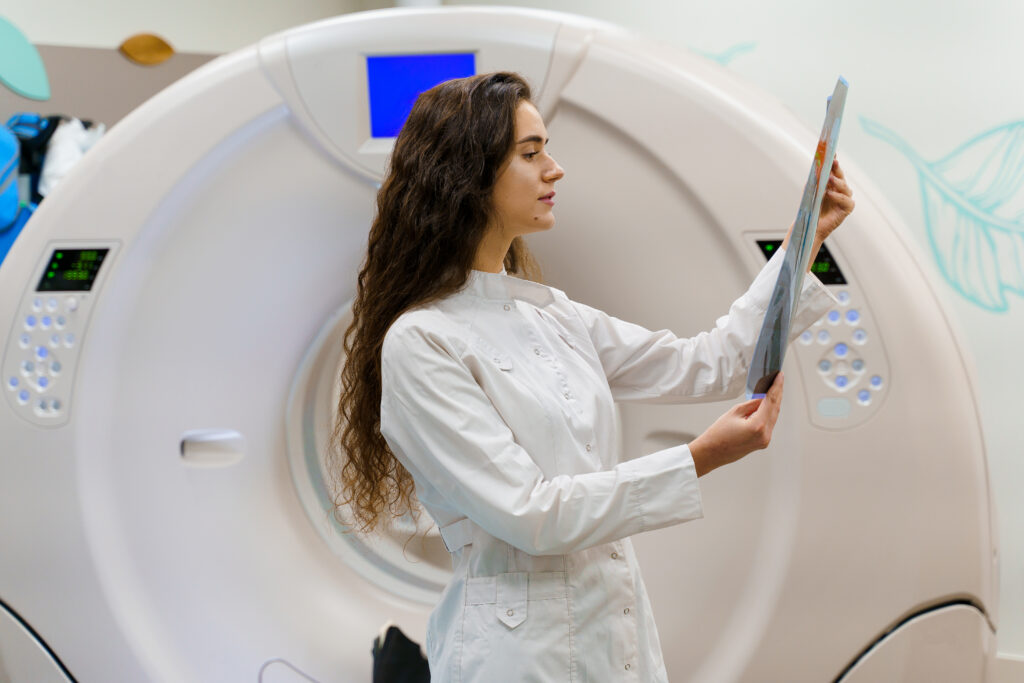
MRI does not “find disease” in isolation. Instead, it identifies structural findings that may warrant monitoring, correlation with other tests, or further evaluation.
Depending on the area scanned, MRI may reveal:
- Variations in soft tissue structure.
- Lesions or masses that require follow-up.
- Changes in brain or spinal anatomy.
- Joint or cartilage degeneration.
- Organ-level changes that are not yet symptomatic.
In preventive contexts, these findings are valuable because they allow clinicians to identify potential concerns earlier and to compare future imaging against a clear baseline.
MRI as a Preventive Screening Tool
Preventive MRI screening is not about predicting the future. Its value lies in:
- Establishing baseline imaging for comparison over time.
- Identifying silent or slow-developing structural changes.
- Supporting risk-based monitoring for individuals with family history or known risk factors.
- Reducing uncertainty through objective anatomical data.
At Invest-Med, MRI results are always interpreted alongside clinical history, laboratory data, and other screening tools to ensure findings are understood in proper context.
Who Might Consider Preventive MRI?

While not appropriate for everyone, preventive MRI screening may be considered by individuals who:
- Are focused on proactive health planning.
- Have a family history of neurological, oncologic, or systemic disease.
- Prefer radiation-free imaging where clinically appropriate.
- Desire a deeper anatomical assessment beyond routine testing.
A physician consultation is required to determine whether MRI screening aligns with an individual’s health profile and goals.
Understanding the Limits of MRI
MRI is a powerful tool, but it has clear boundaries:
- It does not confirm disease on its own.
- Not all findings are clinically significant.
- Imaging results must be interpreted by trained medical professionals.
- Additional testing may be required to clarify certain findings.
For these reasons, MRI is most effective when used as part of a structured preventive screening strategy rather than as a standalone test.
A Thoughtful Approach to Advanced Imaging

Invest-Med integrates advanced imaging into a physician-led preventive care model focused on early insight, informed monitoring, and long-term health planning.
Interested in learning whether preventive MRI screening is appropriate for you?
Book a consultation with Invest-Med to discuss your options in a private, physician-guided setting.